

It’s well established that a graduate degree is the single best investment you can make in your career. Graduate degrees in education all but guarantee higher salaries, earning potential, and a plethora of new opportunities; but the big question most people ask is, how am I going to pay for it?
The good news is that now, more than ever, employers and government agencies recognize the importance of this investment; they have a number of different options available for how to pay for grad school without breaking the bank.
Federal Student Loans
Federal student loans remain the most common and accessible financial aid option for graduate students. They are relatively easy to qualify for and, being federally funded, offer borrowers greater flexibility in debt repayment compared to private loans.

Looking for a graduate program?
- Flexibility: Federal loans offer variety of repayment plans, including Income-Driven Repayment (IDR) plans, which help make repayment possible for graduates.
- Alternative to Private Loans: Borrowers avoid the lengthy application processes, collateral requirements, and credit history concerns associated with private student loans.
- Loan Forgiveness: Federal borrowers may qualify for Public Service Loan Forgiveness (PSLF) and Teacher Loan Forgiveness (TLF).
Student Loan Forgiveness Programs
Upon graduation, borrowers may access programs to help repay outstanding federal student loan debt:
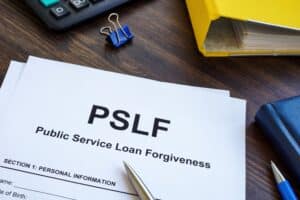
Public Service Loan Forgiveness (PSLF)
- Eligibility: Available to professionals working full-time for a public or non-profit employer, including school administrators, counselors, social workers, teachers, nurses, firefighters, and police officers.
- Requirement: Borrowers qualify for loan forgiveness after making 120 qualifying monthly payments on federal student loans.
- Qualifying Payments: Payments made during deferment periods count, provided the borrower was employed full-time by a qualifying employer.
- Exclusion: Payments made while attending school do not count toward the 120 payment threshold, even if the borrower was employed full-time.
- Recommendation: Borrowers should use the PSLF Help Tool to confirm their eligibility and verify that their employer and student loans qualify.
Teacher Loan Forgiveness (TLF)
- Eligibility: Designed specifically for teachers.
- Requirement: Teachers must teach full-time in a Title I school district for five consecutive years.
- Forgiveness Amount: Borrowers may be eligible for loan forgiveness of up to $17,500 on their federal student loans if they are highly qualified secondary math or science teachers and special education teachers. Other highly qualified teachers can receive up to $5,000.
- Restrictions:
- Borrowers typically need state certification which generally means having a bachelor’s degree and full state certification.
- The borrower must be employed full-time as a teacher for five complete and consecutive academic years in a Title I school.
- Recommendation: Borrowers should consult their state Department of Education, the TCLI Directory and with their loan servicer regarding subject area qualification and certification requirements for TLF.
TEACH Grants: Funding for High-Need Fields
Grants are a form of non-repayable financial aid awarded based on merit, not repayment ability.
- Award Amount: The U.S. Department of Education awards up to $4,000 per year in grant money to graduate students pursuing a Master’s degree in a high-need subject area (e.g., mathematics, science, foreign languages, and special education).
- Maximum Award: The TEACH Grant Program provides a maximum of $16,000 over a four-year period.
- Use of Funds: Funds can cover a portion of tuition costs and living expenses.
- Application: Applicants must complete a Free Application for Federal Student Aid (FAFSA) each year.
- Service Agreement: To receive the grant, students must sign an agreement to teach in a low-income school for at least four years, within eight years of completing their graduate program.
- Grant Conversion: If a student fails to fulfill the service agreement requirements, the grant will convert to a Federal Direct Unsubsidized Loan, with interest accruing from the original date of disbursement. Careful review of the service agreement is essential.
Employer Tuition Reimbursement and Benefits
Employers, particularly school districts and educational institutions, are a likely source of funding through tuition reimbursement or tuition benefit plans.
- Employer Interest: Employers often invest heavily in employee education to retain qualified staff.
- Plan Models: Employer plans generally follow one of two models:
- Direct Payment Model: The employer pays the tuition directly to the educational institution.
- Reimbursement Model: The employer reimburses the employee for tuition costs after the employee submits proof of coursework completion (transcript) and payment receipts.
- Key Requirements: Eligibility criteria often include:
- Maintaining a minimum GPA.
- Committing to work for the district for a specified number of years after completing the degree.
- Employees usually must enroll in the program and notify their HR representative before the semester begins.
- Recommendation: Before enrolling in a graduate program, employees should contact their HR representative to learn about the district’s policy, maximum available reimbursement, and required procedures.
With all these options available, you don’t have to worry about how to pay for grad school; now is the time to make an investment in yourself and your future!
Interested in learning more about your financial aid options for graduate school? Explore our comprehensive funding e-guide here.